
Caring for Moissanite Bracelets: Tips for Longevity

Want your moissanite bracelet to sparkle for years? Here's how:
- Clean Regularly: Use lukewarm water, mild soap, and a soft toothbrush every 1–2 weeks to remove dirt and oils. Avoid harsh chemicals and abrasive cleaners.
- Protect from Chemicals: Keep your bracelet away from bleach, chlorine, and cosmetics to prevent residue buildup or metal damage.
- Remove During Activities: Take off your bracelet before exercising, swimming, or gardening to avoid impacts, scratches, or tarnishing.
- Store Properly: Use soft pouches or fabric-lined compartments to prevent scratches and tangling. Avoid humid areas like bathrooms.
- Inspect Monthly: Check prongs, clasps, and stones for looseness. Address issues immediately with a jeweler.
- Professional Cleaning: Schedule annual cleanings to maintain brilliance and secure settings. Re-plating silver or white gold costs $20–$40 if needed.
- Avoid Extreme Temperatures: Sudden temperature changes can strain metal settings. Store in a cool, dry place.
- Polish Gently: Use a microfiber cloth to maintain shine without scratching the metal or stones.
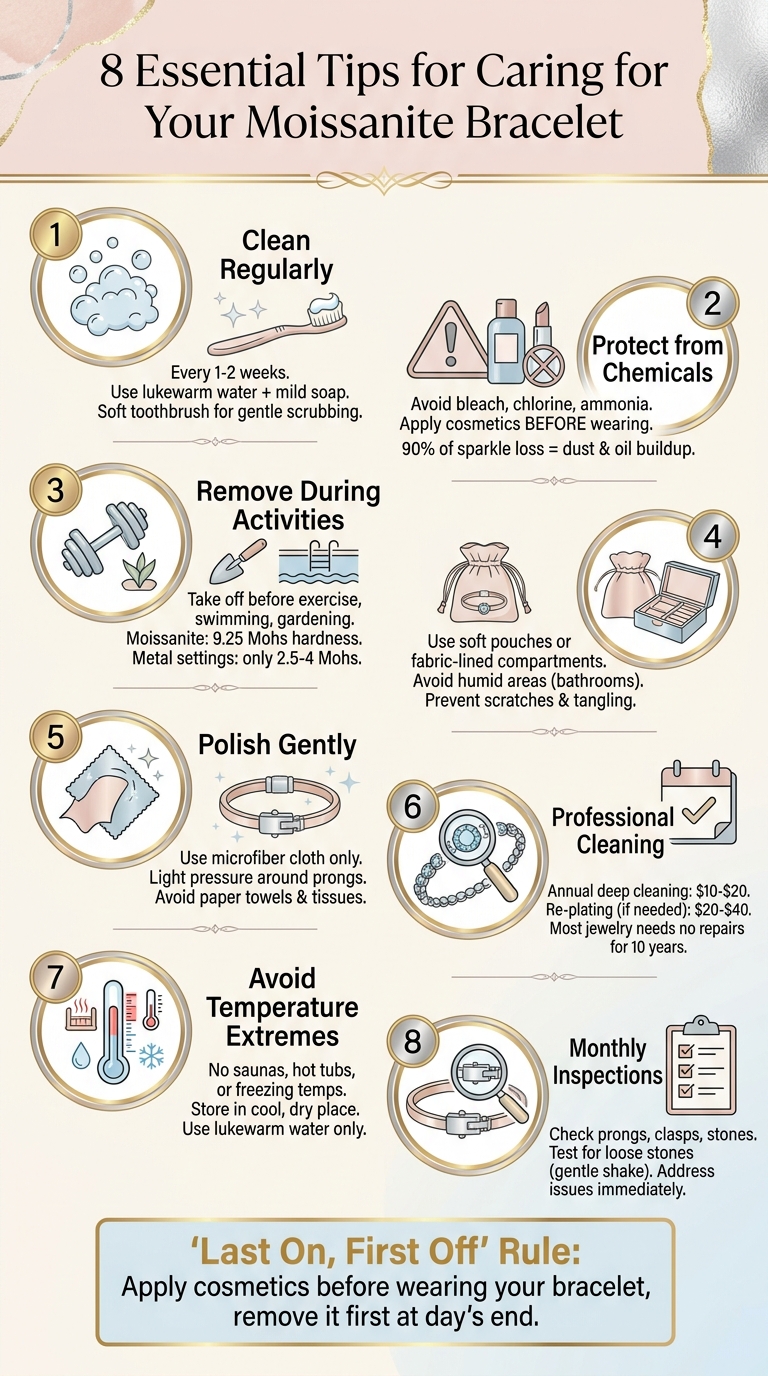
8 Essential Tips for Caring for Your Moissanite Bracelet
How Do You Clean And Care For Moissanite? - Jewelry Market Spotlight
sbb-itb-1bb5b78
1. Clean with Mild Soap and Warm Water
Restoring your bracelet's shine can be as simple as using lukewarm water and a few drops of mild dish soap. Start by mixing 2–3 drops of the soap into a small bowl of lukewarm water. Stir until it forms a sudsy solution - this will safely break down oils and dirt.
"Always go for lukewarm water, as hot water can cause a thermal shock and damage the stones or setting." - Mia Smith, Author, Grown Leo
Place your bracelet into the solution and let it soak for 10 to 30 minutes. This helps loosen dirt, especially in hard-to-reach spots like the spaces between links or beneath the stones. After soaking, use a soft baby toothbrush to gently clean the underside of the stones and metal settings. Be careful not to apply too much pressure.
Once you've finished brushing, rinse the bracelet thoroughly with lukewarm water. To avoid losing small pieces, use a mesh strainer during rinsing. Finally, pat the bracelet dry with a lint-free cloth to eliminate water spots and bring back its brilliance.
Steer clear of harsh chemicals like bleach, ammonia, chlorine, or acetone, as well as abrasive cleaners like toothpaste or baking soda. These can damage the metal and dull your bracelet’s shine. Stick to mild dish soap for safe and effective cleaning.
2. Keep Away from Chemicals and Cosmetics
Taking a few precautions can go a long way in maintaining the beauty of your moissanite bracelet. While moissanite is incredibly durable, the metal settings - often made of softer materials like gold alloys or sterling silver - are more susceptible to damage. Harsh chemicals such as bleach, ammonia, and chlorine can corrode these metals, dulling the overall sparkle of your bracelet.
"Moissanite is resistant to heat and chemicals. However, exposure to harsh chemicals like chlorine or household cleaners can dull its brilliance over time." – Charles & Colvard
Everyday cosmetics can also take a toll on your bracelet. Products like perfumes, lotions, and hairsprays often leave an oily residue that diminishes its shine. In fact, dust and oil film account for about 90% of sparkle loss in moissanite jewelry. Given moissanite’s impressive fire dispersion of 0.104 - 2.4 times that of a diamond - any buildup becomes especially noticeable.
To avoid this, follow the "apply first, wear last" approach. Apply lotions, perfumes, and hair products before putting on your bracelet, and give them at least five minutes to absorb into your skin. Additionally, remove your bracelet before swimming in chlorinated pools, cleaning with household products, or showering. Hard water and soap scum can leave deposits that cloud the stone.
If your bracelet does come into contact with chemicals or cosmetics, don’t panic. A quick soak in warm, soapy water will usually clear away any residue and restore its brilliance. In most cases - about 95% of the time - a “cloudy” appearance is simply surface buildup, not permanent damage.
3. Remove Before Exercise and Physical Work
Moissanite is tough, but its metal settings can be surprisingly delicate. The gemstone scores 9.25 on the Mohs hardness scale, making it incredibly hard - second only to diamonds. However, the metals used for its settings, like gold or silver, are much softer, typically scoring between 2.5 and 4 on the same scale.
Engaging in physical activities such as weightlifting, contact sports, or even tasks like gardening and DIY projects can put your bracelet at risk. Hard impacts during these activities could chip the stone or loosen the prongs, increasing the chances of losing the gemstone.
Sweat is another culprit. It contains salt, which can corrode 14K gold settings, while sterling silver is especially prone to tarnishing when exposed to moisture. Add to that the grime and grease from a workout, which can leave a dull film on the stone, diminishing its sparkle.
If you happen to wear your bracelet during exercise, clean it as soon as possible using warm water and mild dish soap to remove salt and oils. For better care, make it a habit to take off your bracelet before engaging in any physical work, whether it’s lifting weights, gardening, or handling heavy tools. Store it safely in a soft pouch or a separate compartment to avoid scratches from other items. These simple practices will help keep both the gemstone and its setting in great condition.
4. Store in Soft Pouches or Separate Compartments
Once your bracelet is clean, how you store it plays a big role in maintaining its shine. Storing it alongside other jewelry can lead to scratches. While moissanite is known for its hardness, metals like gold or silver can still scratch when they rub against other pieces. Keep it away from harder gemstones as well to avoid potential damage.
Using individual storage solutions, like soft cloth pouches or the original box your bracelet came in, is a simple way to protect it. These keep your bracelet isolated and free from scratches. If your bracelet is made of sterling silver, adding an anti-tarnish strip to the storage can help, especially in humid environments. Excessive humidity speeds up tarnishing, so keeping moisture under control is key.
Chain-style and tennis bracelets have their own challenge: tangling. When these get tangled, untangling them can put stress on the links and even damage the clasps. A jewelry box with separate, fabric-lined compartments is a great option for keeping each piece safe. Look for boxes with velvet or microfiber linings, which add an extra layer of protection against scratches and tarnish.
"Store your pieces individually in soft pouches or jewelry boxes to prevent scratching. Avoid storing them with other harder gemstones or metals that can cause damage." - Charles & Colvard
Make sure your storage area stays dry and out of direct sunlight. Avoid places like bathrooms, which tend to have high humidity. For long-term storage, consider using a moisture-proof bag with a silica gel packet to keep your bracelet in perfect condition. Soft pouches or fabric-lined boxes are ideal for preventing scratches and tangling while ensuring your jewelry stays in top shape.
5. Polish with a Soft Cloth
After cleaning, use a microfiber cloth to gently polish your bracelet and bring back its sparkle without risking scratches to the stones or soft metal settings. Unlike paper towels or tissues, which often contain abrasive fibers, microfiber cloths are designed to be safe for delicate materials like gold or silver. This simple step enhances your cleaning routine.
"Microfiber cloths are ideal for this purpose as they are gentle on the stone and metal settings." - Less Diamond
Once you've cleaned the bracelet, immediately dry it with a lint-free cloth to avoid water spots. Then, use light, careful strokes to buff the metal and remove tarnish. For sterling silver bracelets, a specialized silver polishing cloth is especially effective at tackling oxidation.
When polishing, take extra care around the prongs. Accidentally catching the cloth on a prong can loosen the setting, potentially dislodging stones. Apply only light pressure - while moissanite (9.25 Mohs) is highly durable, metals like gold and silver (2.5–4 Mohs) are more prone to scratches.
6. Get Professional Cleaning Periodically
No matter how meticulous you are with at-home care, your moissanite bracelet will still benefit from an annual professional cleaning. Jewelers use specialized tools - like ultrasonic cleaners and high-pressure steam - to reach areas that home cleaning simply can’t, ensuring your bracelet keeps its sparkle while protecting the integrity of its setting. These professional cleanings also serve as a preventive measure, addressing potential issues before they escalate.
"You should go for professional cleaning annually, which will help preserve your moissanite's brilliance and keep the settings secure." – Grown Leo
During a professional cleaning, jewelers can inspect critical components like prongs, clasps, and links under magnification, spotting wear or damage that might not be visible to the naked eye. With proper care and routine inspections, most moissanite jewelry stays in excellent condition and typically requires no repairs for the first 10 years. Additionally, professional polishing can remove micro-scratches from metal settings, restoring their reflective quality and enhancing your bracelet’s overall sparkle.
For bracelets made from white gold or rhodium-plated silver, consider re-plating every 1–2 years, which usually costs around $20–$40. A deep cleaning and polishing service typically adds another $10–$20 to the expense. Companies like Rokshok offer convenient professional cleaning services tailored to moissanite jewelry, making it easy to maintain your bracelet’s showroom-worthy appearance.
Beyond scheduled cleanings, keep an eye out for warning signs like loose stones, rattling, or bent prongs. If you notice any of these issues, seek professional help right away to prevent further damage.
7. Avoid Extreme Temperatures
Moissanite is durable and can handle high temperatures, but sudden shifts between hot and cold can strain the metal settings. This thermal shock can cause the metal to expand or contract, potentially loosening prongs or even creating tiny cracks over time. When cleaning your bracelet, stick to lukewarm water to avoid these issues.
Cold weather can also pose a risk. When your skin contracts in low temperatures, it increases the chances of your bracelet slipping off.
On the other hand, high heat paired with humidity - like in saunas or hot tubs - can speed up tarnishing in sterling silver settings and might even corrode other metals. These factors make it essential to keep your bracelet in a stable temperature range, both during storage and everyday wear.
To protect your bracelet from temperature-related damage, store it in a cool, dry place away from direct sunlight or windows where UV rays can generate heat. When drying your jewelry, skip heat-based tools like hairdryers. Also, remember to take off your bracelet before entering saunas, steam rooms, or hot tubs. These small precautions help preserve both the metal settings and the stones.
"The perfect resting place for your moissanite is a dry, cool environment shielded from the volatility of temperature swings and the threat of high humidity." – Harlembling
8. Check Settings and Prongs Monthly
Moissanite ranks high on the Mohs scale at 9.25, but the metal settings holding these stones are much softer. Materials like gold and silver, which typically score between 2.5 and 4, are prone to wear over time. That’s why monthly inspections are essential - they help catch small problems before they turn into bigger ones, like a loose or missing stone.
Start by cleaning your bracelet to remove oils and dirt. Then, take a close look at each prong. They should sit snugly against the stone without any visible gaps. To check for issues, gently run the bracelet over a soft cloth. If it snags, it could mean a prong is out of place or damaged. Once you’ve done the visual check, test for movement.
Use a toothpick to lightly tap each stone or give the bracelet a gentle shake. If you hear clicking or notice any wobbling, it’s a sign that a stone might be loose and needs professional attention. If that happens, avoid wearing the bracelet until it’s been inspected and repaired.
Don’t forget to check the clasp as well. It should close securely with a clear, audible click. A loose clasp can compromise the safety of your bracelet. These quick monthly checks take only a few minutes but can prevent costly repairs down the line.
If you do spot any issues, it’s important to consult a professional jeweler as soon as possible. Think of these monthly inspections as your first line of defense, while your annual professional check-up serves as added peace of mind.
9. Skip Abrasive Cleaners and Brushes
When cleaning your bracelet, steer clear of abrasive cleaners and tools to protect its metal settings. While moissanite is exceptionally hard - ranking 9.25 on the Mohs scale - the metals used to hold the stones, like gold and silver, are much softer, with a hardness of only 2.5 to 4. This makes them prone to scratches and damage. Experts in the field emphasize this point:
"Baking soda: It is too abrasive for delicate metals and stones." - Mia Smith, Author
"Toothpaste: Popular as a cleaning agent, it can also scratch the surface of your bracelet." - Grown Leo
Both baking soda and toothpaste contain gritty particles that can leave tiny scratches on your bracelet's metal, which may accumulate over time and dull its shine. Even paper towels can cause harm by scratching polished surfaces.
Stiff brushes are another thing to avoid. Scrubbing too hard can bend prongs or even loosen the stones in their settings, increasing the risk of losing them. Instead, opt for a gentle approach: use a soft-bristled toothbrush (like a baby toothbrush) with warm water and mild dish soap to clean your bracelet carefully.
When drying, go for a microfiber or lint-free cloth instead of paper towels to avoid scratches. If you’re dealing with stubborn buildup, professional steam or ultrasonic cleaning is a safer alternative to aggressive scrubbing.
10. Build Smart Daily Habits
Protecting your moissanite bracelet starts with a simple rule: "last on, first off." Before putting on your bracelet, apply lotions, perfumes, or hairspray. At the end of the day, make it the first piece you remove. This small habit minimizes the buildup of oils and chemicals on the stone's surface and complements regular cleaning and professional checkups.
Another key tip? Always take off your bracelet before showering. While moissanite itself is waterproof, soap and shampoo can leave behind a residue that dulls its sparkle. Hard water minerals can also accumulate on the gemstone and metal setting. Plus, there’s always the risk of your bracelet slipping down the drain - better safe than sorry.
Just like during physical activities, remove your bracelet before heading to bed. Sleeping with it on can cause unnecessary friction or pressure, potentially bending prongs or loosening settings. It may also snag on bedding or hair. While moissanite is highly scratch-resistant, ranking 9.25 on the Mohs hardness scale, it can still scratch softer metals if they come into contact.
If your bracelet gets wet, immediately pat it dry with a lint-free cloth to avoid water spots or tarnish. Store it in a soft pouch to protect it from scratches, especially when paired with softer metals like gold or silver. These straightforward daily habits will help your bracelet shine just as brilliantly as the day you bought it.
Conclusion
Your moissanite bracelet is designed to shine for years, but it needs a bit of care to maintain its brilliance. A simple cleaning routine - using warm water and mild soap every 1–2 weeks - can remove buildup that dims its sparkle. As The Real Jewelry Company puts it, "Moissanite requires minimal maintenance to stay brilliant for a lifetime."
Storage also plays a crucial role. While moissanite's hardness of 9.25 on the Mohs scale makes it incredibly durable, it can scratch softer metals like gold or silver if stored together. To avoid this, keep your bracelet in a soft pouch or a fabric-lined compartment.
Beyond daily care, professional attention ensures your bracelet stays in top shape. Annual inspections can check prongs, secure clasps, and remove any stubborn buildup. If your bracelet includes sterling silver, re-plating (typically $20–$40) can restore its tarnish resistance.
FAQs
Can I wear my moissanite bracelet in the shower?
It's best to avoid wearing your moissanite bracelet in the shower. Water, soap, and chemicals can reduce its shine and might affect its durability over time. To keep your bracelet looking its best, take it off before showering or handling harsh cleaning products.
Why does my moissanite bracelet look cloudy sometimes?
Your moissanite bracelet might lose its sparkle over time because of dust, oils, or grime building up on its surface. To bring back its shine, clean it often with warm water, a bit of mild soap, and a soft brush. This easy upkeep will keep your bracelet looking radiant and beautiful.
How can I tell if a stone or prong is loose?
Regularly checking your moissanite bracelet is crucial to ensure its stones stay secure. Lightly press on each stone to see if it moves or feels loose. Pay attention to the prongs - if they seem bent or unstable, it could mean the stone is at risk of falling out. By doing quick visual inspections, you can spot problems early and prevent potential loss or damage.
