
Soap vs. Ultrasonic: Best Cleaning Methods for Moissanite

When it comes to cleaning moissanite, two popular methods stand out: soap-and-water and ultrasonic cleaning. Each has its strengths and limitations, making them suitable for different situations. Here's a quick breakdown:
- Soap-and-Water Cleaning: Safe, easy, and affordable. Perfect for regular upkeep, this method removes surface oils and grime using mild dish soap, warm water, and a soft brush. It's gentle on all jewelry settings and works well for weekly maintenance.
- Ultrasonic Cleaning: Offers a deeper clean by using sound waves to dislodge dirt from hard-to-reach areas. Best for occasional use or heavily soiled pieces, but the vibrations can loosen stones in delicate settings. It requires specialized equipment and comes at a higher cost.
For most people, soap-and-water is the go-to for routine cleaning, while ultrasonic cleaning is better reserved for tougher buildup or professional use. Always inspect your jewelry before ultrasonic cleaning to ensure the settings are secure.
Quick Comparison:
| Factor | Soap-and-Water | Ultrasonic Cleaning |
|---|---|---|
| Effectiveness | Moderate | High |
| Safety for Settings | High | Moderate |
| Cost | Low | High |
| Time Needed | 10–30 minutes | 2–10 minutes |
| Tools Required | Basic household items | Specialized equipment |
For everyday care, stick to soap-and-water. Use ultrasonic cleaning sparingly, and consider professional inspections for long-term maintenance.
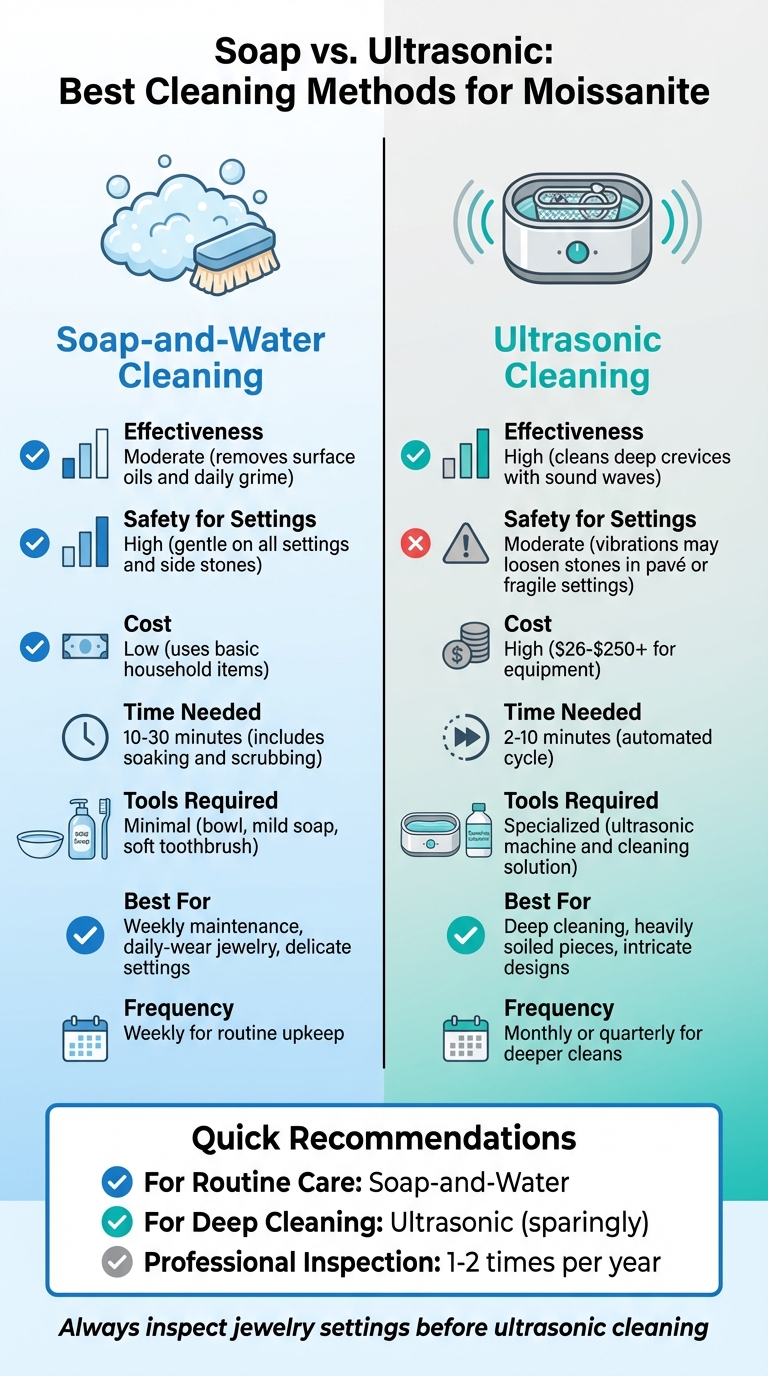
Soap vs Ultrasonic Cleaning Methods for Moissanite Jewelry Comparison
How To Clean Gold, Silver, Diamond, and Moissanite Jewelry At Home! | Astroice Jewelry
sbb-itb-1bb5b78
Soap-and-Water Cleaning Method
The soap-and-water approach is an easy and effective way to keep your moissanite jewelry looking its best. By using mild dish soap and warm water, this method helps break down oils and grime that can dull the stone's shine. Thanks to its impressive Mohs hardness of 9.25, moissanite can handle gentle scrubbing without any risk of damage.
Over time, moissanite tends to attract oils from your skin, lotions, and makeup, forming a rainbow-like film that diminishes its brilliance. A quick soak in soapy water can cut through this buildup with ease. Here’s a step-by-step guide to cleaning your moissanite and a look at the pros and cons of this method.
How to Clean Moissanite with Soap and Water
- Prepare the Soak: Fill a bowl with warm water and add a few drops of mild liquid dish soap. Avoid bar soaps, as they can leave a residue on the jewelry.
- Soak the Jewelry: Place your moissanite piece in the soapy water and let it sit for 10–15 minutes. This helps loosen dirt and oils that have built up over time.
- Gently Scrub: Using a soft-bristled toothbrush, carefully clean the stone and its setting. As Helzberg Diamonds recommends, focus on the grooves and hidden areas where grime tends to collect. Pay extra attention to the back of the mounting, where buildup is most common.
- Rinse Thoroughly: Hold the jewelry under warm running water to wash away all soap residue. Make sure no suds remain, as they can leave streaks or film.
- Dry Completely: Use a lint-free cloth to pat the piece dry, or opt for a hair dryer on a low setting to prevent water spots. For stubborn rainbow-like stains, a touch of silver polish applied with a toothbrush can restore the stone’s sparkle.
Advantages of Soap-and-Water Cleaning
This method is gentle and safe for all types of jewelry settings, as it avoids harsh chemicals and high-frequency vibrations that could potentially loosen stones or damage metal. The mild soap effectively removes grime without being abrasive, making it a great option for regular upkeep.
Another big plus? It’s incredibly convenient. You probably already have everything you need - dish soap, a toothbrush, and a soft cloth - so it’s a budget-friendly way to maintain your jewelry on a weekly or monthly basis, depending on how often you wear it.
Disadvantages of Soap-and-Water Cleaning
The main downside is that this method requires a bit of elbow grease. You’ll need to manually scrub the jewelry, taking care to reach every tiny crevice to ensure all residue is removed.
Additionally, it might not be the best option for tackling tough, hardened debris or deeply embedded grime. In such cases, a more thorough cleaning method or professional assistance may be necessary to restore your jewelry to its full brilliance.
Ultrasonic Cleaning Method
Ultrasonic cleaners use high-frequency sound waves - typically around 42,000 Hz - to create millions of tiny bubbles in a liquid. These bubbles work to dislodge dirt and oils from areas that are otherwise impossible to reach, like the tiny spaces between prongs or intricate designs. This is the same technology trusted by professional jewelers to ensure their pieces are spotless before they reach customers.
"The use of a high-frequency turbulence cleaner is the most effective option for maintaining the brilliance of your Moissanites." – MoissaniteCo.com
Although moissanite’s impressive hardness rating of 9.25 makes it incredibly durable, ultrasonic cleaning isn’t something you should rely on every day. Over time, the high-frequency vibrations can loosen stones, especially in delicate settings like pavé. To minimize risks, experts suggest using this method no more than once a month. For lighter maintenance, every 1–2 weeks might be sufficient. Regular inspections, regardless of your cleaning routine, are essential to keep your moissanite looking brilliant and secure.
How to Clean Moissanite with an Ultrasonic Cleaner
Before you begin, check your jewelry carefully for any loose prongs or fragile settings. Once you’re sure everything is secure, fill the ultrasonic cleaner’s tank with warm water - ideally between 95°F and 104°F - and add a few drops of mild dish soap or a non-toxic jewelry cleaning solution. Avoid harsh chemicals like bleach, chlorine, or ammonia, as these can harm the metal.
Place your moissanite jewelry in the cleaner’s basket. Never place it directly on the bottom of the tank, as this can lead to scratches. Run the cleaning cycle for 2 to 10 minutes, depending on how much buildup needs to be removed. After the cycle, rinse the piece under warm water, inspect it for any loosened stones, and dry it with a lint-free cloth or a low-heat hair dryer.
If you’re unsure about the stability of your jewelry’s setting, it’s a good idea to take it to a professional jeweler once or twice a year. They can check for any shifts in the stones and tighten them as needed.
Advantages of Ultrasonic Cleaning
Ultrasonic cleaning is highly effective for reaching areas that manual cleaning methods simply can’t access, making it perfect for intricate designs and complex settings. It’s also quick - most cycles take just a few minutes. This method is especially good at removing stubborn buildup, like jeweler’s rouge or hardened oils. Some advanced ultrasonic cleaners even claim to eliminate up to 99.9% of bacteria while restoring your jewelry’s shine. However, while it’s efficient, it’s not without its challenges.
Disadvantages of Ultrasonic Cleaning
One downside is the cost. Basic ultrasonic cleaners start at around $26, but mid-range models can range from $149 to $250. Professional-grade machines, like those used by jewelers, can cost thousands of dollars.
Another concern is the potential risk to certain types of jewelry. Delicate settings, such as pavé or tension settings, and pieces with thin prongs are especially vulnerable to the vibrations. As MoissaniteRings.com notes:
"This method is not recommended to use outside of a jewelry shop because the stones may become loose due to the vibration of the machine."
Ultrasonic cleaning is also unsuitable for jewelry featuring softer gemstones like pearls, opals, or emeralds. These stones can crack, dull, or even fall out due to the vibrations. Similarly, antique pieces secured with glue may not hold up well. For these types of jewelry, it’s best to stick with gentler cleaning methods.
Soap vs. Ultrasonic: Side-by-Side Comparison
Let's break down the differences between soap-and-water cleaning and ultrasonic cleaning to help you decide which works best for your jewelry care routine. Soap-and-water is a gentler approach, ideal for everyday maintenance, while ultrasonic cleaning offers a more thorough clean, reaching those tiny crevices that a toothbrush just can't. Each method has its own advantages - your choice will depend on your jewelry's design, your budget, and how much time you have.
Ultrasonic cleaners are known for their speed and precision, which is why professional jewelers rely on them before sending out their orders. However, these machines require extra attention, as the vibrations can sometimes loosen stones in delicate settings. For regular weekly upkeep, soap-and-water is the safer, more reliable option.
Comparison Table
| Factor | Soap-and-Water | Ultrasonic Cleaning | Recommendation |
|---|---|---|---|
| Effectiveness | Moderate; removes surface oils and daily grime | High; cleans deep crevices with sound waves | Ultrasonic |
| Safety for Settings | High; gentle on all settings and side stones | Moderate; vibrations may loosen stones in pavé or fragile settings | Soap-and-Water |
| Cost | Low; uses basic household items | High; requires specialized equipment | Soap-and-Water |
| Time Needed | 10–30 minutes (includes soaking and scrubbing) | 2–10 minutes (automated cycle) | Ultrasonic |
| Required Tools | Minimal; bowl, mild soap, soft toothbrush | Specialized; ultrasonic machine and cleaning solution | Soap-and-Water |
Ultrasonic cleaning stands out for speed and thoroughness, making it a great choice for intricate or heavily soiled pieces. On the other hand, soap-and-water is safer, more affordable, and easier to use, making it the go-to for routine cleaning. If you opt for ultrasonic cleaning, use it sparingly and check your jewelry carefully afterward to ensure settings remain secure. Up next, we’ll dive into which method is best suited for specific needs.
Which Method Should You Use?
Choosing between soap-and-water and ultrasonic cleaning really comes down to the type of residue, how often you wear your jewelry, and its design.
For everyday buildup - like skin oils, lotions, hairspray, or cosmetics - soap-and-water cleaning does the job well. This method is especially helpful for removing the iridescent "oil slick" effect that can appear on moissanite surfaces. A soft toothbrush works better than ultrasonic vibrations for this, as it gently scrubs away the film without risking damage. For frequently worn items, such as engagement rings, a weekly soap-and-water routine keeps them sparkling while avoiding unnecessary wear and tear. Save ultrasonic cleaning for deeper cleans, perhaps monthly or quarterly.
Ultrasonic cleaning is more effective for grime that’s deeply embedded and can’t be reached with a toothbrush. If your stone still looks dull after a manual clean, running it in an ultrasonic cleaner for 2–5 minutes can help dislodge hidden debris.
The design of your jewelry also plays a big role in determining the safest cleaning method. Some settings are more delicate than others. As HER'S Style explains:
"If the stone is installed in a more fragile environment, such as a paving setting, it is best to avoid using an ultrasonic cleaner as it can cause small stones to fall off".
For pavé settings or intricate multi-stone designs, stick to soap-and-water to avoid any risk of loosening stones.
Start with soap-and-water for regular cleaning and turn to ultrasonic cleaning only when scrubbing doesn’t bring back the sparkle. Always inspect your jewelry settings before using any mechanical cleaner, and for pieces you wear daily, consider a professional cleaning once or twice a year.
Professional Cleaning Services for Moissanite
Professional cleaning offers a thorough approach to maintaining your moissanite jewelry. Jewelers don’t just clean your pieces - they carefully examine them for structural issues you might overlook at home, such as loose prongs, thinning metal, or damaged settings. This detailed inspection helps secure stones and prevents potential damage down the road.
Using industrial-grade ultrasonic equipment and specialized cleaning solutions, experts can tackle even the most stubborn residue. They also polish metal settings - whether gold, platinum, or silver - to restore their shine and remove surface scratches. As Helzberg Diamonds puts it, a skilled jeweler can transform a dull ring or pair of earrings into "polished moissanite masterpieces that look as good as new".
Most jewelers recommend scheduling a professional cleaning once or twice a year. This deep-cleaning routine works hand-in-hand with your regular at-home care to keep your moissanite sparkling. For jewelry from Rokshok, this level of attention ensures the long-term quality and brilliance of your pieces.
Rokshok’s cleaning services are specifically designed for moissanite. Their expert jewelers understand the unique properties of this gemstone, including its tendency for temporary color changes during repairs. By using specialized techniques, they ensure these changes are temporary and your jewelry remains undamaged.
After ultrasonic cleaning, it’s essential to have your jewelry inspected. Professional jewelers will check that all stones are secure and tighten any that might have loosened during the cleaning process. This extra step ensures your moissanite jewelry stays both beautiful and durable.
Conclusion
Keeping your moissanite jewelry in top condition requires a mix of regular soap-and-water cleaning and occasional ultrasonic cleaning. Soap-and-water cleaning is perfect for weekly upkeep, easily removing oils and residues that can dull your jewelry’s shine. All you need are simple household items to get the job done.
Ultrasonic cleaning, on the other hand, is great for reaching those tiny crevices that hand-cleaning might miss. However, frequent use of ultrasonic cleaners can risk loosening the settings, so it's best to leave this method to professionals when needed.
To strike the right balance, consider a combined approach. Use soap and water weekly for daily-wear pieces like engagement rings, and schedule professional inspections to ensure your jewelry’s settings remain secure. This not only keeps your moissanite sparkling but also helps catch loose prongs or settings before they cause any damage.
While moissanite is incredibly durable - scoring 9.25 on the Mohs Hardness Scale - the metal settings still need attention. Whether it’s a Rokshok piece or any other moissanite jewelry, a consistent cleaning routine is key to maintaining its brilliance and protecting your investment for years to come.
FAQs
Is ultrasonic cleaning safe for moissanite jewelry?
Yes, ultrasonic cleaning is safe for moissanite jewelry when used properly. Moissanite is a tough gemstone that can handle the vibrations from an ultrasonic cleaner without getting damaged. That said, it’s crucial to stick to the instructions provided by the manufacturer of your ultrasonic cleaner. Also, avoid using it on pieces with delicate or glued settings, as these could be compromised during the cleaning process.
If you’re hesitant about using an ultrasonic cleaner, you can always rely on a simple soap-and-water cleaning method. It’s a gentle and reliable way to keep your moissanite jewelry looking brilliant.
How often should I clean my moissanite jewelry with soap and water?
To keep your moissanite jewelry shining brightly, give it a gentle clean with mild soap and warm water about once a month. If you wear it every day or spot any buildup, you can clean it more often. Make sure to rinse it thoroughly and dry it with a soft, lint-free cloth to preserve its sparkle.
Why does my moissanite jewelry still look dull after cleaning, and how can I fix it?
If your moissanite still looks dull after cleaning, give it another gentle wash using warm water and a few drops of mild dish soap. Use a soft-bristled brush to carefully remove any lingering residue, then rinse it thoroughly and dry it with a soft, lint-free cloth. For a more thorough clean, consider using an ultrasonic cleaner. These devices are excellent for bringing back the sparkle of your jewelry - just be sure to follow the manufacturer's instructions to use it safely.
